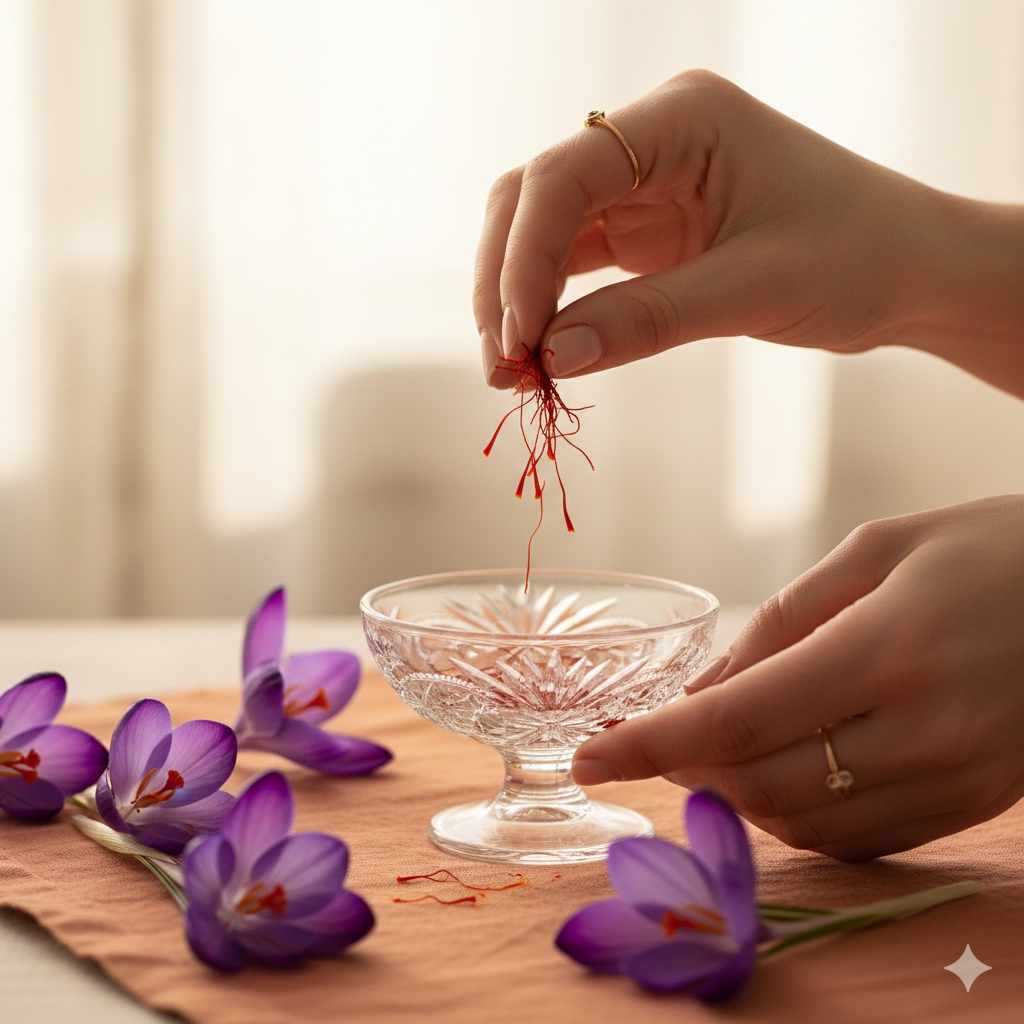
If you’ve ever wondered what makes saffron so special - and so expensive - you’re not alone. This vibrant spice has captivated cooks, healers, and perfumers for over 3,000 years, and today we’re diving deep into everything you need to know about the “red gold.”
What Exactly Is Saffron?
Saffron comes from the Crocus sativus flower, specifically from the dried stigmas (the thread-like parts inside the flower). Each crocus flower produces only three stigmas, and these must be harvested by hand during a very short annual blooming period.
Here’s why it’s so precious: it takes approximately 150,000 flowers to produce just one kilogram of saffron. That’s a lot of delicate hand-picking!
The Health Benefits
Modern science has begun to validate what traditional medicine has known for centuries:
Mood Enhancement
Multiple clinical studies have shown that saffron can help improve mood. The active compounds safranal and crocin appear to influence serotonin levels in the brain, similar to how some antidepressant medications work.
Anti-Inflammatory Properties
Saffron is rich in antioxidants, including crocin, crocetin, and safranal. These compounds help fight inflammation throughout the body, which may benefit everything from joint health to skin clarity.
Sleep Support
Research suggests saffron may help improve sleep quality. Its calming properties can help you fall asleep faster and enjoy more restful sleep.
Cognitive Function
Emerging studies indicate saffron may support memory and cognitive function, potentially helping protect brain cells from oxidative stress.
How to Buy Quality Saffron
Not all saffron is created equal. Here’s what to look for:
Signs of Quality:
- Deep red color with slight orange tips
- Strong, honey-like aroma with hay-like undertones
- Threads are dry but not brittle
- Comes from reputable sources (Iran, Spain, Kashmir, and Morocco are top producers)
Red Flags:
- Very cheap prices (if it seems too good to be true, it probably is)
- Uniform red color with no variation
- Little to no aroma
- Powdered saffron (easier to adulterate)
How to Store Saffron
Proper storage is essential to maintain saffron’s potency:
- Keep in an airtight container
- Store in a cool, dark place (not the refrigerator)
- Use within 2-3 years for best flavor
- Protect from moisture and light
How to Use Saffron
The key to using saffron is “blooming” - releasing its color, flavor, and beneficial compounds:
- Standard method: Soak threads in warm water or milk for 15-20 minutes
- Quick method: Grind threads with a pinch of sugar, then add warm liquid
- Traditional method: Lightly toast threads in a dry pan for 30 seconds, then add to warm liquid
A little goes a long way - typically 10-15 threads is enough for a dish serving 4-6 people.
Ready to Start Cooking?
Now that you understand the basics, it’s time to experience saffron for yourself. Start with one of our beginner-friendly recipes:
- Persian Saffron Rice - A classic that showcases saffron beautifully
- Saffron Honey Latte - A simple, comforting introduction to saffron
Welcome to your saffron journey. Once you experience the magic of this incredible spice, there’s no going back!
You Might Also Like
Qu'est-ce que le Safran ? Guide du Débutant sur l'Épice la Plus Précieuse au Monde
Si vous vous êtes déjà demandé ce qui rend le safran si spécial - et si cher - vous n’êtes pas seul. Cette épice vibr...
Le Safran contre l'Inflammation : Ce que Dit Vraiment la Science
L’inflammation est à la racine de nombreuses conditions de santé chroniques, de l’arthrite aux maladies cardiaques. A...
Saffron for Inflammation: What the Science Actually Says
Inflammation is at the root of many chronic health conditions, from arthritis to heart disease. As more people seek n...